Popular Posts

Showing posts with label Auto Car. Show all posts

Tuesday, May 17, 2011

The Pros and Cons of New vs. Old Cars


Is it better to buy a used car - or spring for a new one? There are pros and cons to consider with either alternative. Here's the skinny:

New car pros, Probably the biggest single pro is the car itself. Since it's brand-new, it's never been driven by someone else. Possible abuse or failure on the part of a previous owner to have properly maintained the car are two things you don't have to worry about. Another big pro is that new cars are not unique. One 2008 Model X is going to be exactly the same as all the others on the lot - and more importantly, on another dealer's lot. You don't have to agonize about "losing" that one-of-a-kind low-miles, metallic red coupe with just the equipment you wanted. If you're getting the hard-sell at one dealership, move to the next one on your list. His new cars will be the same as the other guy's new cars. But his deals might be better.

The third big pro to buying a new car is the new car warranty. Everything from the rubber to the roof is covered - and will be, for at least the next three years and 36,000 miles (the minimum comprehensive warranty on any 2008 model year vehicle; some manufacturers offer even longer-lived comprehensive warranties - and many have limited powertrain warranties that cover big ticket items like the engine and transmission for as long as ten years and 100,000 miles). Bottom line: Even if something does go wrong, someone else will be paying for it. So one less thing to worry about.

A fourth really big pro with new cars is you can pick and choose exactly what you want - from color to options. It's true that dealers often want you to buy a car "from inventory" - meaning, choose one from among the cars sitting on his lot. But assuming the model you're interested in hasn't been cancelled and is still being produced, you can insist on ordering it with everything you want - and nothing you don't. It's your money, after all. Get what you want with it.


The Pros and Cons of New vs. Old Cars

New car cons, The big one is the bottom line: New cars cost more than used cars. A new car is at the very peak of its value and even with rebates, discounts and haggling, you will be paying top dollar. If it's a just-launched/popular model, expect to pay full MSRP sticker - and maybe some more on top of that.

Con number two is related to con number one: New cars depreciate (lose value) quickly. On average, 10-20 percent of their original sales price during the first year of ownership. That comes right out of your pocket - and should be factored into your purchasing decision, particularly if you know you will be trading it in within five years or so.

The third big con that comes with the keys to a new car are the "peripheral costs" - things like taxes (including personal property taxes) as well as (usually) higher insurance costs - especially if you are going from an older, low-value car to one that's got a replacement value of many tens of thousands of dollars. Also, some types of cars can cost a lot more to insure than many people realize - until after they've committed to buying the car. High-performance sports cars, for example. It's wise to ask your insurance company about the cost of covering the car you're thinking of buying - before you buy. And factor any applicable taxes/fees you'll have to pay into your decision.

Used car pros, You'll pay less "up front." Usually, much less.

That's probably the single biggest advantage to buying a used car. Even a slightly used car (such as a former lease car that's only 2-3 years old) will cost considerably less than a brand-new version of the same make/model car.

Number two, someone else "ate" the depreciation. Most of it, at any rate. Yes, a used car will continue to lose value the older it gets and the more miles you clock; however, the year-to-year differential is almost always less with a used car. Where a brand-new car might be worth 30 percent less than you paid for it by the time two years have passed, your used car will typically lose only about 10-15 percent of its value over the same time period. After a certain point (after about 5-7 years) the value of a used vehicle stabilizes, with further erosions in value amounting to an ever-lower percentage of the vehicle's total worth.

Third, you'll usually save a lot of money on things like personal property taxes and insurance with a used car. Property taxes are based on retail value; the lower that amount, the lower your tax bill. Where a new car might cost you $500 per year in property taxes, a 3-5 year-old car might cost you $150 or less. Over a five-year period, that can add up to a considerable savings. And while insurance companies like to talk up the latest safety advantages of brand-new cars, the actual discounts they offer are often very small relative to the total premium - which is based to a great extent on the "replacement value" of the vehicle insured. New cars cost more to replace. It's as simple as that.

A final "pro" with late-model used cars is that they are generally much better-built, longer-lived and reliable than used cars once were. In the '70s, a three-year-old car with 40,000 miles on it was well into vehicular middle age. But today, a late model used car with 40,000 miles is still a baby; even with 75,000 miles on it, things should be ok for at least another 50,000 miles - assuming proper treatment by its previous owner and the same good stewardship by you! Plus, as new car warranties grow longer-lived, many late-model used cars are at least partially still covered. And you can usually purchase an extended warranty for additional piece-of-mind.

Used car cons

You don't always know what you are getting. Who knows how it was treated by its previous owner(s)? It may have been abused - or just not serviced per the factory recommendations. Problems related to lack of said service (or abuse) could be on the verge of manifesting themselves - and leaving you holding the bag for repair costs. The vehicle might have been in a wreck; or maybe under water. Sometimes, these things can be hard to detect. With a new car, you have to worry about the MSRP; with a used car, you have to worry about the price you pay - and the car itself, too.

Another big con with used cars is you will likely have less freedom of choice - and thus, be under greater pressure to buy the car you're looking at - because you know it will be tough to find another just like it, with the same options, in the same color, with the same mileage, etc. The seller knows this, too. It's harder to walk away because if you do, you know you're back to square one.

The third con is the biggest one. A used car is... used. It will have flaws (paint chips, minor damage, stains on the carpet, etc.) and it has less useful life left in it. No matter how gently you drive, no matter how rigorously you service it, a used car will not last as long as a brand-new car. You'll be paying for maintenance items more often - and the "curve" will trend upward - and faster. A used car with 40,000 miles on it is simply more likely, statistically speaking, to need things like a new transmission relative to a brand-new car with zero miles on the clock.
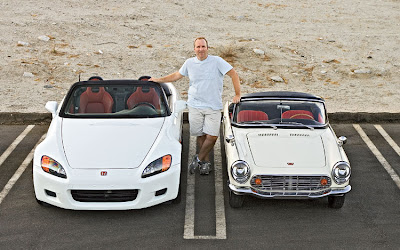

The Pros and Cons of New vs. Old Cars
Bottom line, With older cars, you're basically gambling - hoping you won't be dealing with major problems on the "back end" while saving a bunch of money on the "front end." Sometimes that pays off; sometimes, it doesn't. The new car buyer is more or less guaranteed against losing big bucks as a result of failures/defects - because they should be covered under warranty. But he's also guaranteed to pay more on the "front end," too. It all comes down to this: How much money would you like to save - and how much potential risk are you're willing to assume? Know the answer to that question - and you'll know how the pros and cons really stack up!

Eight Things We Don't Have to Know About, Can't Buy, Or Do Anymore

new cars have electronic fuel injectionEight Things We Don't Have to Know About, Can't Buy, Or Do Anymore, Probably you can get through life without ever having to learn to write longhand; so long as you can sign your name, you're fine. We type everything else, right? It's the same with many things car-related, too. No one today needs to know how to double-clutch, for example - unless you happen to own a car built before the 1950s. The last twenty years of technological advances have added several items to the roster of obsolescent skills and things you don't see much anymore, including:


"Choking" the engine

Since all new cars have electronic fuel injection, there's no need to set the choke (either manually, by pulling on a knob or automatically, by pumping the gas pedal) because fuel-injected cars don't have a choke. They have a cold-start enrichment circuit - but it requires no special action by the driver. Just get in, turn the key - and go.


new cars have electronic fuel injection
Threshold braking

There are still a few cars that come without ant-lock brakes (ABS) but no many - and there days are numbered. So drivers no longer need worry about learning how to apply the brakes just hard enough to get maximum braking without locking them up and sending the car into a violent skid. The computer handles that now; the driver just slams the brake as hard as he can and the system will prevent the wheels from locking while applying maximum possible braking force to slow the car down. No more loss of steering control; no more black stripes in the road leading to a pile of broken glass and crunched-up sheetmetal.

Locking the hubs

Virtually all 4WD systems today are either automatic or electronic. The onboard systems either decides for you when to engage 4WD - or the driver does it by turning a knob on the console. The manly fun of stopping in the middle of a muddy road (or in a downpour), climbing out and manually rotating the engagement mechanism on each front wheel to engage 4WD is fast slipping into the mists of history.

Rolling down the windows

Have you noticed how few cars still come without power windows as standard equipment? Even the meanest little econo-boxes increasingly include power windows (and air conditioning) in the car's base price. It's become an expected "given" - and probably within three or four years at the outside it will be impossible to find a new car that still offers manual roll-up windows. (See also: Locking doors manually.)

Emptying the ashtray

As smoking has become politically incorrect, cup-holders and power points have supplanted ashtrays - several of which, at least, used to be found in just about every new car. Today, if an ashtray is even available, you have to special order it as part of an optional "smoker's package."

Lubing the chassis

Many new vehicles have no grease fittings - and so, don't require the periodic attentions of the grease gun. They are "lubed for life" - which (according to automaker PR) reduces maintenance costs but also means that expensive suspension/chassis parts are also "throw away" parts that can't be serviced, either.


new cars have electronic fuel injection
Laying rubber

It's still possible to screech the tires and leave a pair of black marks in the road - but electronic nannies are making it harder and may soon render it impossible. Burnouts are irresponsible (though fun!) and the automakers are working feverishly to put under computer control any uncontrolled vehicle movement - such as a slip-sliding drag race-style launch. Traction/stability control systems are becoming omnipresent; they may soon be impossible to turn off.

Rustproofing

This is handled by the factory, which does a magnificent job of applying protective coatings that keep new cars from rusting out for many years. These days, it's common for the body to outlast the engine - the reverse of what used to be the case. And it's completely superfluous to buy a rust-proofing package beyond what the car got when it was assembled at the factory. That business has gone the way of the pet rock and Betamax.

Tuesday, December 14, 2010

Getting Ready For an Accident

Getting Ready For an Accident, Accidents are by definition unexpected, but it's still a good idea to make some preparations ahead of time - just in case.


* Prepare your car - Keep a notepad and pencil (not a pen; they dry up) in the glovebox so you'll have something to write details about the accident on - instead of an old Taco Bell chalupa wrapper. If there are injuries or major damage involved, it may help you in court (or with your insurance company) to have precise details you can refer back to.

Use your cell phone's video camera (or keep a disposable digital camera in the car someplace) to record things such as skid marks or a tree that obscured a stop sign. It's a good idea to carry a couple of flares in the trunk. These can help avoid a secondary accident - another car piling into your damaged vehicle, because the driver didn't see it in time to slow down or move over.

A flashlight (with good batteries) and a blanket in the trunk are good to have, too.

if you're one of the few people (like me) who doesn't have a cell phone, consider buying one of those inexpensive, for-emergency-use only phones to keep in the car. They're made to call 911 only, so there's no monthly plan.

* Prepare yourself - Every time you get behind the wheel, assume you'll be involved in an accident. Wear you seat belt. And even more importantly, drive distrustfully. Don't enter an intersection without looking left and right - even if you have a green light. Red light running is epidemic and the fact that you have the legal right-of-way won't protect you from being T-boned.

Be on the lookout for addled/oblivious drivers - the ones who are so busy talking on their cell or scarfing down a meal they don't notice you are in their blind spot. Scan your mirrors constantly - especially your rear view mirror when stopped in traffic. You may notice that a huge SUV is barreling toward your rear end in time to take evasive action - or at least brace for the impact and lessen the chances of a disabling whiplash-type neck injury.

Practice emergency braking in order to become familiar with how your vehicle reacts - and how long it takes to come to a complete stop. If your vehicle has ABS - and most cars built since about 2005 do - find an open stretch of road without much traffic on it and mash the pedal all the way to floor as hard as you can. (The ABS system will keep the wheels from locking up and you will still be able to steer the car.) This will give you a feel for how quickly your car can stop in a maximum-effort. emergency situation. Think about where you'd try to point the car if you had to swerve suddenly. Notice things like big trees - so you can at least try to avoid piling into them head on. Look for "soft landings" - or at least, softer landings.

* Follow post-accident protocol - If you do wind up involved in an accident (especially a fender-bender) the first thing to do is get yourself out of the way of further possible harm by moving out of and away from your vehicle. Some people understandably don't want to move their cars before the police arrive so that it's easier to determine fault (for insurance/court purposes) and that's fine - but don't mill around in traffic waiting for the police to show up. It's a good way to get killed by an oblivious rubber necked.

Exchange information with the other driver - name, address, driver's license number/state of issue; phone number(s) and all insurance information. Be sure the name of the driver matches the name of the listed insured on the insurance card. You should also write down on your pad the year, make and model of the other vehicle and its license plate number - as well as its overall condition and the areas where it was damaged. If you have your cell phone/disposable camera, take pictures of both vehicles, including areas not damaged. This is a good way to protect yourself against being charged with doing damage you didn't do. A photograph is worth a thousand words - especially in court.

If the other driver refuses to show you his driver's license or insurance information and you have a cell phone, immediately call the police. While it's not a legal requirement in many areas to wait for police after a minor fender-bender, it is a legal requirement to exchange driver's license and insurance information - and a major violation to drive without a valid license or insurance coverage. If something like this happens to you and the other driver looks like he's going to flee the scene, memorize the plate number of his car and a physical description of him - and get on the phone, call the cops. Hit and run is an even bigger deal than driving without a valid license or insurance coverage.

* Call your insurance company - Do this as soon as possible after the accident. Give them all the details you jotted down on your pad. Use your notes to help reconstruct what happened. If the accident was your fault - and you want to do the right thing - admit it. If it wasn't - or you don't know whose fault it was - leave it up to the insurance company to sort out.

If the accident involved personal injury, major damage and/or tickets, your insurer may provide legal counsel for your court date (depending on the type of coverage you have). There is one case where you may not want to call the insurance company - a minor accident, especially one involving just you (no other car). In this case, paying for the damages "out of pocket" will be a relatively small, one-time hit to your wallet - as opposed to the very real possibility of several years of higher insurance premiums based on your filing a claim and the fact that you now have an accident on record. As a general rule, if the cost to fix the damage is about the same as your deductible, it might be a better deal to just cut a check - and live and learn.

Sunday, December 12, 2010

Traffic Laws That Don't Make Sense


Traffic Laws That Don't Make Sense, We may have no choice but to obey - or risk a ticket - but that doesn't make bad traffic laws any more worthy of our respect than the Prohibition-era ban on alcohol. Here are a few of my favorite Traffic Laws That Don't Make Sense :


* No right on red (ever) - This one is apparently intended to protect over-cautious, under-skilled drivers - the kind who need both lanes to be totally clear for at least a football field's length before they feel confident enough to make the turn. Since they can't safely judge the speed and distance of oncoming traffic, we get to wait at the light too - even if it's obvious there isn't another car coming for miles.

* Midnight red - It's 2 o'clock in the morning and you've come to a red light that stays red forever. You sit and sit and sit - engine idling, gas and time wasting - even though it's clear the roads are empty in all directions. Sometimes, the light even cycles without giving you the green. (A common problem for motorcycle riders, because the bike doesn't trip the sensor that triggers the light.) Of course, if you become exasperated and run the light - even after stopping completely to make sure it's safe and the way is absolutely clear - it's almost guaranteed there will be a cop lurking nearby, burning the midnight oil just for you.

In Europe, where sensible traffic laws are more the rule than here, many signaled intersections switch over to flashing yellow - "proceed with caution" - after a certain hour, when traffic has died down. It is assumed that drivers are competent enough to make a judgment call on their own - and it seems to work perfectly well. It's a custom we should think about importing.

* No left turn at light - Cousin to the no-right-on-red rule, this is the one where you find yourself at an intersection wanting to make a left turn across an opposing lane of traffic onto a sidestreet. But instead of a "yield to oncoming traffic" green light - sensible policy - you're stuck with a red light - on the assumption you've got inch-thick cataracts and the ability to judge the speed and distance of oncoming traffic of Mr. Magoo. You're supposed to wait patiently for the green arrow - even when there's no oncoming traffic and you could literally get out and push the car safely across the intersection.

Like no right turn on red, it's a well-intended law designed to protect the worst drivers out there from their own marginal skills and poor judgment - but which treats the rest of us like dumbos, too.

* Under-posted speed limits - This is the biggie. Speed limits are not supposed to be random numbers picked at whim by a government bureaucrat - or revenue-minded police chief. They're supposed to be done according to traffic surveys that indicate an appropriate speed that balances safety with the goal of smoothly flowing traffic traveling at a reasonable pace for a given stretch of road.

A specific formula exist to determine this, too. It's called the "85th percentile speed" - which boils down posting the limit in accordance with the natural flow of traffic. When speed limits are set at the 85th percentile, "speeding" is virtually eliminated - without any need for cops or radar traps. Reason? Most people are neither stupid nor reckless and drive within reason, given the road, conditions and their "comfort zone." On most highways, today, the 85th percentile speed is about 70 mph. And fortunately, most highway limits are now close to 70 mph, too.

However, most posted speed limits on secondary roads still set well below the 85th percentile speed - typically at least 5-10 mph below it. This turns almost every driver out there into a "speeder" - in the legalistic/technical sense of driving faster than a number on a sign. It usually has nothing to do with safe driving, though. Things are set up this way to give police an easy reason to pull over just about anyone at just about any time - and to generate lots of revenue for the local government's piggy bank. We all know it - and so do the cops, even if they don't say so openly.

Genuinely dangerous drivers should be aggressively targeted; but using the law to extract the "motorists' tax" from unwary drivers over trumped-up "speeding" charges is unfair and cynical and does nothing to make the roads safer.

* Primary enforcement seat belt laws - This is the name given to laws that give police the authority to pull a motorist over simply for not wearing a seat belt.

The question here isn't whether it's prudent to buckle-up. Obviously, it is. It's whether failing to wear a seat belt ought to qualify as a "moving violation" - and give police a pretext to pull over an otherwise law-abiding motorist. Not wearing a seat belt may increase your risk of injury or death if there is an accident. But is that anyone's business but yours? Not wearing a seat belt poses about as much of a threat to others as failing to eat right or exercise. It increases your personal risk, perhaps - but it's really no one's business but your own.

Turning on the flashing lights and pointing guns our way for this "violation" is completely over the top - and ought to stop.

* Sobriety checkpoints - In the name of law and order, we've come to accept being randomly stopped, questioned and made to produce ID without having done anything at all - or even given reason to suspect we may have done something wrong. "Your papers, please!" is not what America is supposed to be all about. The goal of getting drunks of the road is beside the point. Probable cause is - or ought to be - the point.

It's wrong to subject people who have done absolutely nothing to even suggest they've been drinking and driving to random stops and interrogations. It violates basic civil liberties - the right to be free from unreasonable searches and seizures; to be left in peace until you've given clear reason for a cop to suspect that you, specifically, have committed a crime. By all means, stop and check out any driver who appears to be weaving, driving erratically or otherswise giving good reason to suspect he may be liquored up. But leave the rest of us alone and free to go about our business until we've given good reason to warrant a closer look.
Alert. Email is incomplete due to blocked images. Add to safe sender list now.