Popular Posts

Wednesday, January 12, 2011

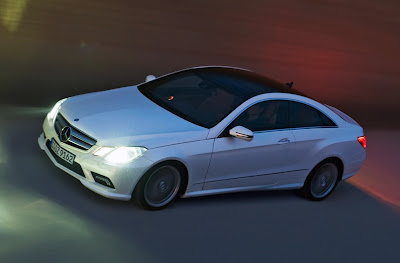
Mercedes-Benz will bring to Frankfurt Estate E-Class

Mercedes-Benz will bring to Frankfurt Estate E-ClassMercedes-Benz will bring to Frankfurt Estate E-Class: The company Mercedes-Benz officially confirmed previously appeared on that in September at the International Automobile Exhibition in Frankfurt, held the world premiere of Universal's new E-Class generation. Currently, E-Class is presented only as a sedan and coupe, which were presented this year at MOTORSHOW in Detroit and Geneva, respectively.

Detailed information about Universale Mercedes-Benz E-Class has not yet been reported. So far only known that the range of engines that avtombilya be similar to that proposed for other versions of the model, namely: four-and six diesel engines with power from 136 to 231 horse power and six gasoline units, including the "quartet" with direct injection and turbocharging.

It was expected that the sale of the Universal E-Class in the European market will begin immediately after the premiere of the car in Frankfurt.As previously reported, Mercedes-Benz is also considering setting up with three versions of the Universal E-Class. This car will be done in the style of concept-kara Fascination and, according to some sources, it comes on line in 2011.

Monday, January 10, 2011

Toyota's Z-car, the 1979-2002 Celica Supra

Toyota's Z-car, the 1979-2002 Celica Supra
Toyota's Z-car, the 1979-2002 Celica Supra, Nissan's Z-car may have been the first Japanese sports car to make a real splash in the United States - but crosstown rival Toyota wasn't going to sit on its hands indefinitely.


Especially since Toyota had technically beaten the Z-car to the punch by nearly three years with the stunning 2000GT - which made its debut at the 1965 Tokyo Motor Show. Unfortunately (for Toyota) the aluminum-bodied, in-line six-powered 2000 GT was both complex and expensive; it was also produced in extremely low numbers (appx. 351 examples, total, with only about 60 of those making it to America) and for just three full years (1967-'70), after which the program was cancelled.

Datsun sold more 240Zs in a month. By the early-mid '70s, the Z-car was making huge inroads against clumsy-handling, gas-guzzling and increasingly wheezy American muscle cars - and also against the still quick and nimble but not-so-reliable British sports cars of the era.

Toyota desperately wanted to get back into the game. There was the Celica - a semi-sporty, rear-drive, two-plus-two. It came to market shortly after the Datsun 240Z, in 1971. But the Celica was a at best a slightly warmed-over econo-box compared with the athletic, purpose-built Z-car (which also featured a standard in-line six vs. the much less prestigious - and powerful - four-cylinder found in the Celica).

But it was, as they say, a start. With the guiding spirit of the 2000GT in mind, Toyota engineers began work on a new kind of Celica - one that would (in time) prove the equal of the Z-car. It would be called Supra.

At first, the car was basically a stretched and hopped-up version of the Celica. The inaugural 1979 Mk I model shared the same basic chassis (including the solid rear axle/RWD layout) but was 5.1 inches longer than the standard Celica - necessitating different sheetmetal in several areas, including the rear quarter panels. There was also a 2000GT-inspired front-end treatment and wider B pillars to give the car a more aggressive look. But the really important difference was under the hood.

Instead of the Celica's four-cylinder engine, Toyota engineers endowed the first Supra with a 2.6 liter in-line SOHC six - a clear shot across the bow aimed directly at the Nissan Z-car. This engine developed 110-hp (initially) and was the first Toyota production engine to be fitted with electronic fuel injection as standard equipment - a rare feature in the late '70s that would not see widespread use in American cars until well into the mid-late 1980s.

Like its spiritual forebear the 2000GT, that first-year Celica Supra also came standard with four-wheel disc brakes (another rarity back in '79), a 5-speed manual gearbox (with a 4-speed automatic available optionally), sport-tuned suspension and gauge pack with tachometer - yet another "something" that wasn't commonly found in most cars until many years later.

At first, the cars came through with stamped steel wheels and plastic trim covers - just like the early Z-cars. But by 1980, these were tossed in favor of 14x5.5-inch aluminum alloys. Another functional improvement came in 1981, when the displacement of the SOHC six was upped to 2.8 liters (and power output ticked up slightly to 116-hp, net).

The Mk I '79-'81 Celica Supra was a reasonable straight-line performer in its day - capable of getting to 60 mph in about 11.2 seconds, with a top speed of about 115 mph at redline. In the late '70s/early '80s, these were solid numbers - not too far off the pace of contemporary V-8 muscle cars such as the Chevy Camaro Z-28 or Pontiac's Firebird Trans-Am. And the Celica offered much better balance, braking and handling - very much like its Nissan rival. Total production of the Mk I was approximately 63,895 units. Still, it was only a beginning. There was much work yet to do.

In 1982, the second generation Celica Supra bowed - with major changes evident throughout, including a new dual overhead cam (DOHC) 2.8 liter in-line six, now rated at 145-hp. The Mk II was offered in two forms: enthusiast-oriented P-type (for "performance") or softer, luxury-oriented L-type. While both used the same engine, P-types came through with a more aggressive final drive ratio (4.10 or 4.30) while the L-types were fitted with a 3.727:1 ring and pinion for better fuel economy and less engine buzz at highway speeds. The "Ps" were hunkier looking, too - with wider rims (14x7s and 225/60-series performance tires vs. 14x5.5-inchers and P195/70-14 all-seasons), pronounced fiberglass fender flares and a wild (for the time) rear spoiler. Firm-fitting sport buckets on the inside with driver-adjustable manual lumbar support and side bolsters were also part of the package - with a limited slip differential available optionally.

The Mk II's modified Macpherson strut (front) and semi-trailing line (rear) suspension was tuned by Lotus and by '85 - the final year for the second generation cars - power output was up to 165 hp. Straight line performance and handling had improved dramatically compared with the original '79-'81 versions. The car was now capable of reaching 60 mph in about 8.7-8.9 seconds; top speed edged close to 130 mph. The Supra was maturing into an impressive GT coupe that was rapidly closing the distance between itself and more established competitors.

1986 saw the introduction of an all-new Mk III, the first year for a Supra that was no longer also a Celica - in name or otherwise. Beginning with this model year, the two cars went their separate ways - with Supra becoming an all-out (and rear-drive) high-performance super coupe that shared nothing with its now front-wheel-drive, toned-down forbear except the Toyota nameplate.

A new 3-liter engine was now standard, with output finally cresting the 200-hp mark. But this was merely the Supra's standard engine. For buyers with a real need for speed, Toyota offered a turbocharged version of this engine (beginning with the '87 models) that was good for 230-hp, dropping the car's 0-60 times to just over six seconds. The turbo engine featured "distributor-less" coil-on-plug ignition - the first production application of this now-common technology in a Toyota vehicle. Four channel ABS, traction control and an electronically adjustable suspension system (TEMS, or Toyota Electronically Modulated Suspension) were among the very high-tech for the times equipment found in the Mk IIIs. A targa-style roof was available, too.

In '88, Toyota released a low-volume Turbo-A model designed to compete in Group-A Touring Car championships. A high-pressure (7.8 psi) turbo, more aggressive cams and high-flow injectors goosed output to 263-hp, making the Turbo-A Supra the fastest Japanese production car then available. Just 500 of these very special Supras left the factory - all of them black hardtop coupes with custom-fitted leather interiors.

The Mk III had a long production run, lasting through the '92 model year - almost twice the three-year shelf-life of the Mk I and Mk II Celica Supras. However, while performance continued to grow sharper with each passing year, the Supra was gradually transforming into an expensive semi-exotic - with an equally semi-exotic price tag. The trend continued with the introduction in 1993 of the Mk IV Supra - which sported an available twin-turbo 3-liter engine and 320-hp (a 220-hp non-turbo engine was still standard equipment).

Twin-turbo models also received a new Getrag six-speed manual transmission, 17-inch rims (16s were standard on the non turbo cars) and 4-piston brakes, among other upgrades. Mk IVs also had aluminum hoods, magnesium steering wheels and lightweight suspension pieces to shave weight and reduce unsprung mass. Toyota's variable valve timing (VVTi) system appeared in '98, by which time the Supra was at the pinnacle of its technological development and performance capability. A twin-turbo Supra could deliver 0-60 times of 4.6 seconds and quarter mile runs in the 13.1 second range at nearly 110 mph.

These numbers made it one of the world's quickest street cars at the time. Even by today's standards, nearly 20 years later, a 4.6 second 0-60 time is still supercar quick.

But the base price of a Mk IV Supra was now almost $34,000 - and turbo models were pushing $40k. This was big money in the early-mid '90s - and it just happened that the market for powerful coupes took a nosedive during this period. Sales slumped badly, despite the objective fact that the Mk IV was without question the quickest, fastest, best-handling and most formidable Supra of them all.

It is an irony of history that both the Supra and its crosstown nemesis, the Nissan 300ZX, eventually fell victim to their own over-achievement. By the mid-late '90s, each car had developed into a true Ninja from fairly humble beginnings - and each suffered declining sales interest as ever-improving performance tracked with ever-escalating price. Nissan eventually dropped the Z-car and Toyota did the same with its Supra, pulling it from the U.S. market after 1998 - and canceling it entirely after 2002. The Z-car, of course, made a comeback. We're still waiting on the Supra to do the same....

Sunday, December 19, 2010

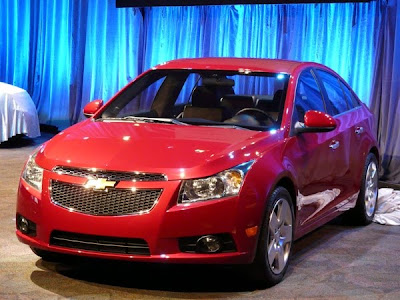
2011 Reviewing the Chevy Maibu

2011 Reviewing the  Chevy MaibuReviewing the 2011 Chevy Maibu
Reviewing the 2011 Chevy Maibu, Things have gotten easier on GM-inclined, mid-sized family sedan buyers since the recent "retirement" of Pontiac and Saturn. Where once there were at least three separate GM models to look at, now there's just one - the Chevy Malibu. And the Malibu's only real competition - if you're looking to stay with a domestic-brand car - is the Ford Fusion. So, which to choose?


WHAT IT IS

The Malibu is Chevy's value-priced, mid-sized family sedan. It starts at $21,975 for an LS with four-cylinder engine and runs to $27,015 with 3.6 liter V-6. Its main domestic-brand rival is the $19,695-$28,505 Ford Fusion, which leans a bit more toward the sporty side of the aisle - and also offers an available all-wheel-drive system, which the front-wheel-drive-only Malibu doesn't.

WHAT'S NEW FOR 2011

Big updates for 2011 include a standard six-speed automatic (with manual shift control feature) and updated OnStar with free (for six months) "turn-by-turn" navigation assistance.

WHAT'S GOOD

Solid value; "American car" good looks. Comfortable, big car ride in a mid-sized package. Roomier interior than Fusion. 33 mpg on highway with Ecotec four-cylinder engine.

WHAT'S NOT SO GOOD

Not as sporty/fun to drive as the Fusion. No manual transmission option. No all-wheel-drive option. No available GPS.

UNDER THE HOOD

The '11 Malibu is available with either a 2.4 liter "Ecotec" DOHC four-cylinder that produces 169 hp or (optionally) a 3.6 liter, 252 hp DOHC V-6. Both Malibu engines are paired with a six-speed automatic driving the front wheels.

EPA mileage figures for the '11 Malibu weren't yet published at the time of this review, but GM claims the Ecotec four, which features variable valve timing and electric-assist power steering, will deliver 22 mpg in city driving and 33 mpgs on the highway. Those numbers would make make the Malibu one of the most fuel-efficient mid-sized sedans on the market. As a comparison, the similar Ford Fusion sedan equipped with the 2.5 liter, 175 hp four-cylinder engine, achieves 29 mpg on the highway.

GM says the Malibu's optional 3.6 liter V-6 (which is basically a detuned version of the same unit found in the current Camaro as well as the Cadillac CTS) can achieve 17 mpg city and 26 mpg on the highway. This engine also features variable valve timing (but steering is assisted by a conventional engine-driven hydraulic pump). The four-cylinder Malibu takes about 9.5 seconds to go from zero to 60 mph. Equipped with the more powerful V-6, the Malibu's 0-60 time drops by nearly three full seconds to 6.5-6.7 seconds or so.

ON THE ROAD

The Malibu has been an American family car favorite for decades, even as the underlying chassis has evolved from rear-wheel-drive ('70s and '80s) to the current front-wheel-drive layout.

While some things have changed, much remains familiar - most notably the Malibu's easygoing nature. Even the V-6 version, which is among the quicker cars in this segment, has a relaxed feel to it. Much more so than the Fusion, which has a firmer ride and feels like a smaller car, even though it's not.

One reason for this is the Malibu's relatively long wheelbase (112.3 inches), which is nearly as long as the Mercedes E-Class (113.1 inches) and significantly longer than the Ford Fusion's 107.4 inch wheelbase. But in terms of overall length, both cars are within about an inch of each other (191.8 inches for the Chevy vs. 190.6 for the Ford).

Big cars feel "big" - planted and solid - in part because they have longer wheelbases than stubbier cars. And this is one of the reasons why the Malibu has that appealing big car highway car ride esteemed by several generations of Malibu buyers. The other reason is suspension tuning that's more relaxed than many of the more sporty-oriented mid-sized sedans out there, including the Fusion. The Malibu's much closer in terms of its cushy ride quality to something like a Toyota Camry or the new Hyundai Sonata - but wrapped up in all-American sheetmetal.

If your main desire is the best family car in a domestic car, the Malibu is going to win your heart. If you want more Euro-sportiness (handling and ride-wise as well as appearance-wise) the Fusion will probably be more to your liking. Acceleration-wise, the four-cylinder version of the Malibu feels quicker than its 0-60 time sounds, in part because of the new six-speed automatic. There's less RPM drop between gear changes than there was with the old four speed automatic and the shifts themselves are snappy and well-timed. This new transmission also comes standard with GM's steering wheel-mounted TapShift manual shift controls. Tap the "+" button to go up, then "-" to drop down a gear.

With the V-6, a Malibu is about as quick as a early-mid '90s Mustang GT - which only had about 215 hp to work with from its much larger (and much less fuel-efficient) 5.0 liter V-8 engine. This is a measure of how far, power and performance-wise, we've come in the space of just ten or 15 years. Current mid-sized, V-6 powered family cars like the Malibu are quicker - and stronger - than the V-8 muscle cars of the not-so-long-ago past. That's pretty incredible!

AT THE CURB

The Malibu's look is red state conservative - and very American. It is a squared-off, masculine lug of a car. Many buyers want exactly that - and the Chevy delivers.

Inside, too. There's a modern-ish, pod-style gauge cluster, but overall the layout is as direct and simple as a John Wayne movie.

No surprises, no weirdness - just straightforward functionality. Large rotary dials to control the AC; big (and easy to understand) buttons for everything else. Front and rear seat head/legroom is slightly more generous than in the Fusion, too (by about half an inch, in most respects) although the Malibu's trunk is slightly smaller than Fusion's (15.1 cubic feet vs. 16.5 cubic feet).

The Malibu doesn't offer all-wheel-drive (the Fusion does) but Chevy does give buyers standard "turn-by-turn" navigation assistance through the OnStar communication system. This may be the better buy, relative to in-dash GPS systems - which not only tend to cost a small fortune ($1,500-$2,000 is typical) but which are also likely to be technologically out-of-date within a couple of years.

With turn-by turn, you simply call in for assistance with directions; an OnStar operator will guide you to your destination in real time. If you want "real" GPS, you can always buy a Garmin unit for about $400 - much less than the cost of a factory unit - and you can take it with you when you leave the car, too. Or use it another car.

Another nice little upgrade for 2011 is standard Sirius-XM satellite radio (with USB port for iPod/MP3 players) plus a power driver's seat with power lumbar adjustment. Bluetooth wireless, remote engine start and a high-end Bose premium stereo are among the luxury features you can add at extra cost.

2011 Reviewing the  Chevy Maibu

THE REST

You won't find anything low-budget, let alone sub-par, in the Malibu. Most of the materials used are better than average - and nicer than the car's price range might lead you to expect. This is true across the line today; there are virtually no cars, at any price, that have that early '80s Blue Lite Special ambiance about them.

The Malibu's cabin may not be as Euro-modern as, say, a Mazda6 (or the new Hyundai Sonata) but it's very pleasant overall. The retro-themed (early '60s Corvette) dual cockpit shape is (again) very American and looks pretty sharp in the available two-tone color schemes Chevy offers. GM has upped the standard warranty to a very solid five years or 100,000 miles - although the basic warranty remains a little skimpy at three years or 36,000 miles.

The Fusion's standard warranty is also three years or 36,000 miles - but its powertrain warranty is just five years or 50,000 miles. (I'd be a little nervous about that, if I were looking at an AWD-equipped Fusion. GM's Stabilitrak traction/stability control system, ABS with Panic Brake Assist (primes the system for full power braking force when the system detects an imminent panic stop situation) and front seat side-impact air bags are standard on all Malibu trims. The OnStar system will also automatically summon EMS in the event of a crash.

THE BOTTOM LINE

This is an unpretentious, easy-to-like family car with no significant faults or weaknesses that pretty much sells itself.